
Ground Made Ready Before Construction Crews Arrive
Site preparation in Enoree for homebuilders, property developers, and landowners establishing access routes or building areas
What happens before a single foundation form is set or a building permit is pulled determines how every phase of construction after it goes. Site preparation involves clearing vegetation, removing obstacles, shaping terrain, and establishing the conditions that construction crews, concrete contractors, and utility installers need before their work can begin. Masengale Land Service provides site preparation and site work for property owners, homebuilders, and developers in Enoree who need land brought to a buildable condition from its current state—whether that means raw wooded acreage or a previously disturbed lot that requires reshaping.
The sequence of site prep work is driven by construction plans and site conditions rather than a fixed checklist. Clearing happens first where vegetation is present, followed by grubbing to remove stumps and root masses that would create settlement problems under compacted fill. Grading follows to establish the elevations needed for the building pad, access drive, and drainage patterns. On sites where soil has been disturbed by prior use—old agricultural fields, previously logged tracts, or lots where a structure was previously demolished—additional evaluation of subgrade conditions is required before grading can establish a stable finished surface. Masengale Land Service coordinates the work sequence with the property owner's construction timeline to avoid gaps between site prep completion and the start of building activity.
Describe your site conditions, construction plans, and timeline to receive a project estimate based on what the work actually involves.
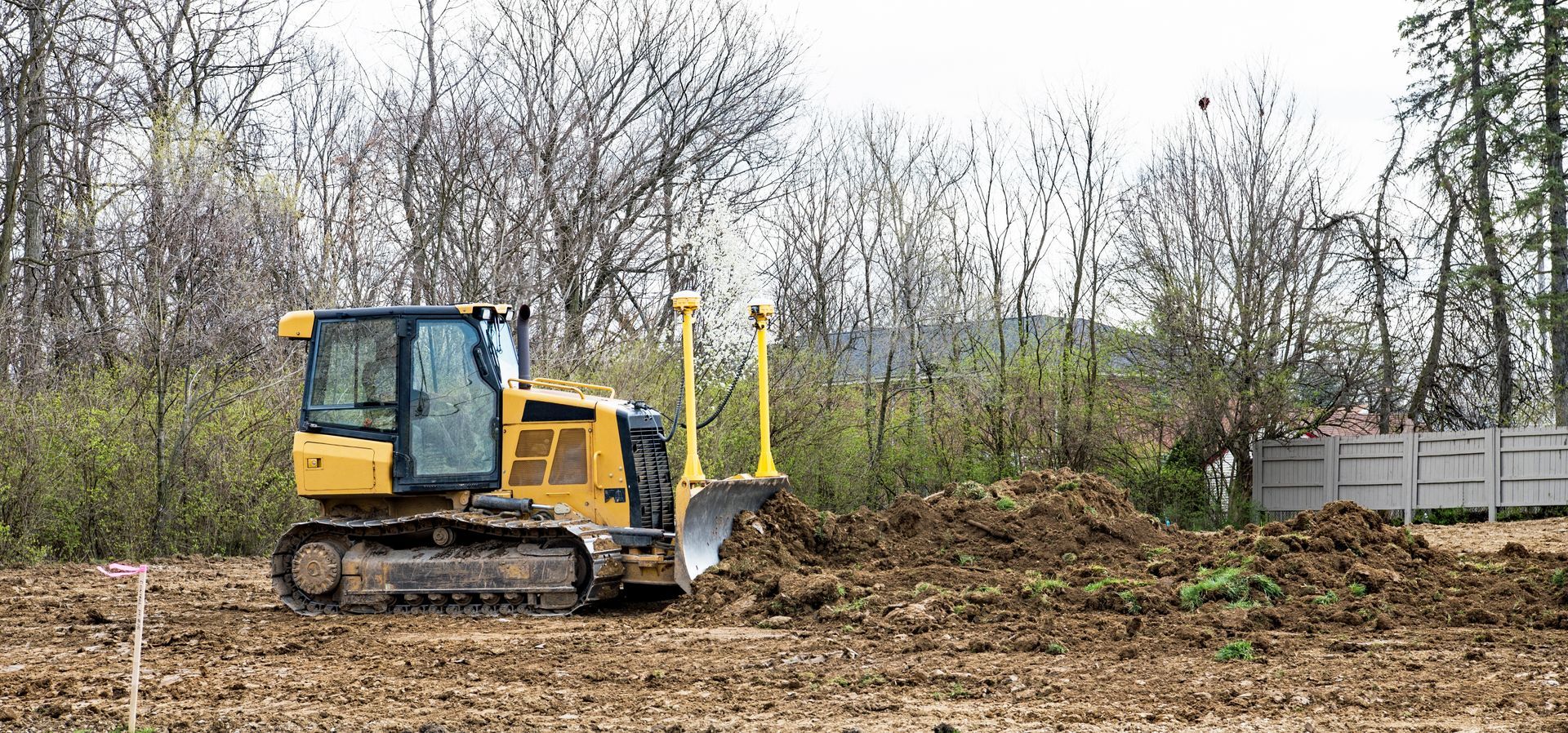
What Site Preparation Actually Accomplishes Before Building Begins
Site prep is not a single task—it is a coordinated series of operations that must be completed in the right order and to the right standard for each phase of construction to proceed correctly. Clearing removes above-ground vegetation. Grubbing addresses the root systems and organic material below grade that clearing equipment leaves behind. Grading reshapes the subgrade to specified elevations. Each of these steps depends on the one before it being finished to an appropriate standard—grading over ungrubbed material, for example, leaves organic content in the fill zone that compacts poorly and causes the surface to settle unevenly after construction loads are applied.
Once site preparation is complete, the result is a building-ready surface: defined pad elevations, established access routes, and drainage patterns that move surface water away from the building envelope. Builders arriving on a properly prepared site can begin foundation work, utility trenching, and framing logistics without losing time to ground conditions that should have been addressed before they got there. Masengale Land Service understands that delay between site prep completion and construction start costs money, so the work is sequenced to hand off a site that is ready to use immediately.
Site work scope varies widely based on parcel size, terrain complexity, and what the construction project requires. A single-family homesite on a flat cleared lot requires considerably less preparation than a multi-structure property development on sloped, heavily wooded acreage. Access for construction equipment—particularly concrete trucks and large framing deliveries—must also be factored into the site prep plan, since an access route that cannot support loaded vehicle traffic will become a problem the moment construction begins.
Questions About the Site Preparation Process
These questions address how site preparation work is scoped, sequenced, and evaluated—including what drives decisions on site and what a construction-ready property looks like when the work is complete.
What is included in site preparation versus what gets handled by the general contractor?
Site prep typically covers vegetation removal, stump grubbing, terrain grading, and basic access establishment—utility installation, foundation forming, and building pad compaction testing are usually handled by the general contractor or specialty subcontractors after site prep is complete.
How does the construction plan affect how site prep is done?
Building footprint location, foundation type, finished floor elevation, and driveway alignment all determine where material is cut, where fill is placed, and what grade tolerances the finished surface must meet—site prep done without those specifications often has to be redone before construction can proceed.
Why do previously disturbed lots sometimes require more preparation than raw land?
Lots where structures were demolished, fill was placed previously, or agricultural activity compacted the soil unevenly may have subsurface conditions—soft spots, buried debris, or inconsistent compaction—that need to be identified and corrected before grading can establish a stable subgrade.
What site access considerations affect how site work is performed on rural Enoree-area properties?
Properties accessed by unpaved roads or easements may require the access route itself to be prepared before heavy equipment can be mobilized to the work area—establishing a stable entrance pad and haul route is often the first task on rural sites where the existing access cannot support equipment loads.
How is a site prep project handed off to the construction team?
A properly prepared site includes documented grade elevations, established benchmark references, and cleared access for all equipment expected during construction—communicating those deliverables to the builder before site prep begins ensures that the finished condition matches what the construction crew needs.
Masengale Land Service also performs site preparation and site work in Woodruff, Whitmire, Clinton, and Laurens. To discuss your project requirements and what the site prep scope involves, call Masengale Land Service at (864) 340-3393 with details about your parcel, existing conditions, and construction plans.