Dense Vegetation Cleared Without Hauling Debris Away
Forestry mulching in Enoree for wooded acreage, overgrown trails, and fence lines reclaimed from heavy brush
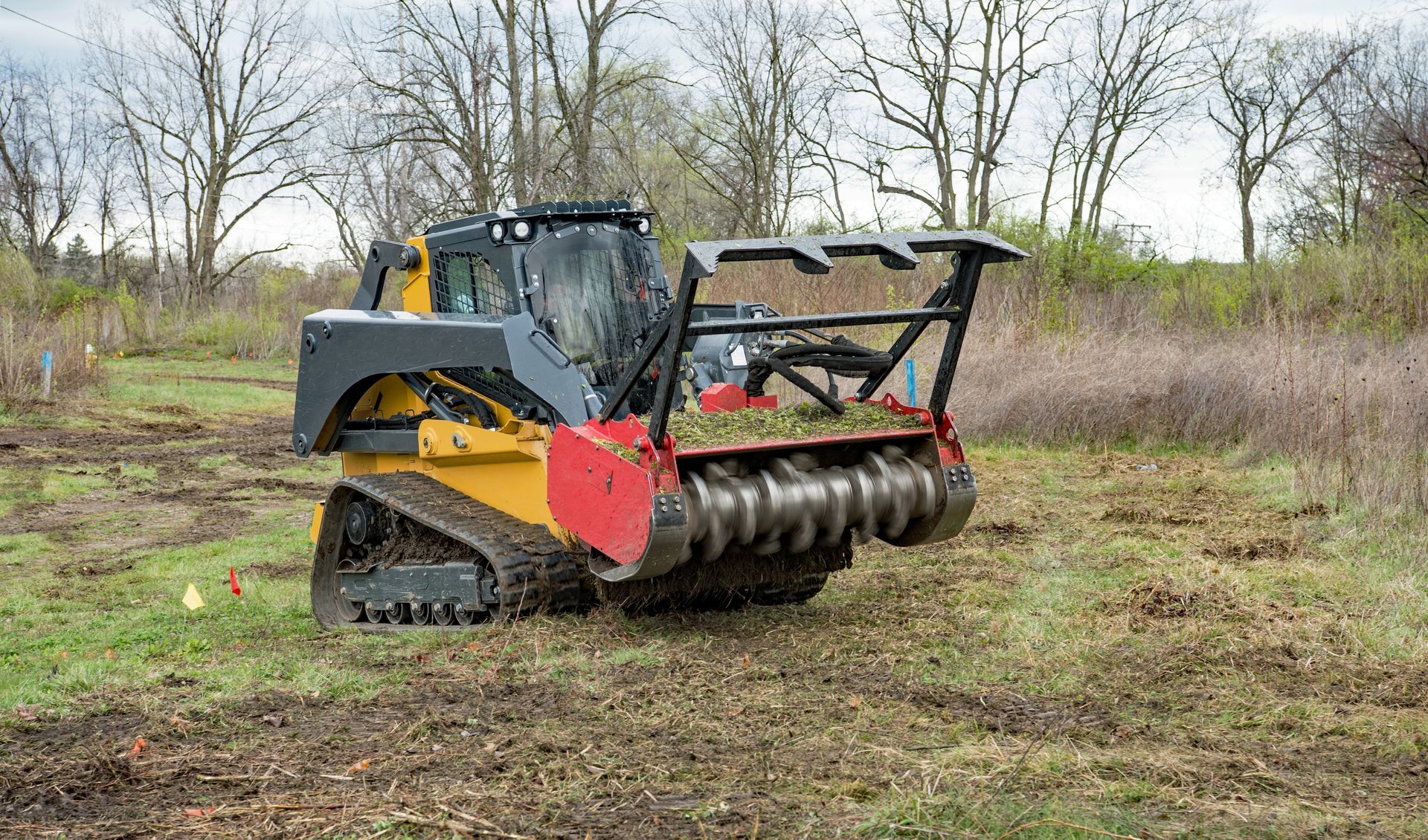
Brush, saplings, and dense undergrowth accumulate on rural properties faster than most owners anticipate, and once a fence line or trail corridor closes in, the only practical way to recover it is with equipment built specifically for that kind of work. Masengale Land Service offers forestry mulching for property owners in Enoree dealing with thick vegetation that has made portions of their land inaccessible or unusable. Rather than felling, piling, and hauling material off the property, forestry mulching processes trees and brush through a single machine pass—shredding everything above ground level and leaving the resulting mulch in place on the soil surface.
The suitability of forestry mulching for a given project depends on what's being cleared and how the land will be used afterward. The process works well on small-diameter trees, heavy brush, and vine-covered areas where a dedicated mulching head can move through the vegetation efficiently. On properties with large-diameter timber, mulching is typically paired with conventional felling and removal rather than used as the sole clearing method. Terrain accessibility also matters—steep slopes or areas with standing water limit where the equipment can operate safely and productively. Masengale Land Service evaluates these conditions before recommending the method so the approach fits the actual site.
Arrange a site assessment so vegetation type, terrain, and equipment access can be reviewed for your specific property.
Why Forestry Mulching Works for Specific Clearing Situations
The core advantage of forestry mulching over conventional clearing is that it eliminates the debris management step. Conventional brush clearing produces piles of cut material that must be chipped, burned, or hauled—each of which adds cost, time, or both. A mulching head processes that same material immediately and deposits it as ground cover, which suppresses regrowth, holds the soil surface in place on sloped terrain, and breaks down over time without any secondary handling. For fence line maintenance, trail reclamation, and boundary clearing on rural Enoree-area acreage, this means the work can be completed in a single mobilization rather than multiple trips.
After mulching, the cleared area looks immediately different from the standing brush that was there before—the ground is visible, the vegetation layer is gone, and the mulched material lies flat rather than piled. Fence lines that were buried under vines and woody growth become accessible and inspectable. Trail corridors that had closed to foot or vehicle traffic open back up. The mulch layer left on the ground surface also provides a visual indicator of exactly what was processed, which is useful when the work is being done to a defined boundary or easement line.
One factor that affects every forestry mulching project is the size of the material being processed. Most mulching equipment handles stems up to a certain diameter efficiently—exceeding that threshold slows production and can cause wear on the cutting head. When a property has a mix of large timber and heavy brush, a combined approach using mulching for the understory and conventional felling for larger trees often produces the most efficient result at the lowest overall cost.
Common Questions About Forestry Mulching Work
These questions address how forestry mulching is applied on rural and wooded properties, including what the method handles well, how the work is sequenced, and what the finished area looks like.
What size vegetation can forestry mulching equipment handle?
Most commercial forestry mulching heads process stems up to six to eight inches in diameter efficiently—larger trees require conventional felling first, after which the mulching equipment handles the remaining understory and brush.
How does mulching affect the soil surface after clearing?
The shredded material deposited by the mulching head acts as ground cover—it suppresses new growth for a period, reduces surface erosion on sloped ground, and breaks down into organic matter over time without requiring removal or disposal.
When is forestry mulching the right choice compared to conventional clearing?
Mulching is well-suited when the goal is vegetation removal without hauling debris, when the property will not be immediately graded or built on, and when the clearing area is accessible to tracked equipment—properties scheduled for immediate construction typically require full clearing and grubbing instead.
Why does terrain slope matter for forestry mulching equipment access?
Mulching heads are mounted on tracked carriers that have defined safe operating slopes—on steep or unstable terrain, the equipment cannot work safely or maintain the cutting angle needed to process vegetation effectively, which affects where the method can be applied on a given property.
What should a property owner do to prepare for a forestry mulching project?
Walking the clearing boundary with the contractor before work begins allows the operator to confirm where the cut edge will be, identify any large-diameter trees that need to be handled separately, and verify that there are no buried obstacles—fencing wire, old posts, or debris piles—within the cutting path.
Masengale Land Service also performs forestry mulching in Woodruff, Whitmire, Clinton, and Laurens. To discuss whether forestry mulching is the right approach for your property, call Masengale Land Service at (864) 340-3393 and describe the vegetation type, acreage, and what you want the land to look like when the work is done.