
Uneven Ground Shaped to Support What You Build
Land grading in Enoree for rough terrain, drainage concerns, and properties being prepared for construction or access improvements
A finished grade is what makes the difference between a site that drains correctly and holds its surface and one that pools water, shifts under load, or stays inaccessible after heavy use. Masengale Land Service provides land grading for property owners in Enoree who need uneven ground reshaped to support driveways, building pads, or general property improvements. Rural properties in this region commonly have natural terrain variation—ridge lines, low spots, and sloped areas—that must be addressed before any structure or access route can be built to last.
Grading work begins with evaluating existing elevations, soil conditions, and what the finished site needs to accomplish. Cut-and-fill calculations—determining where material is removed from high areas and redistributed to fill low ones—depend heavily on what the soil will compact to and whether imported fill will be needed to reach the target grade. Masengale Land Service reviews the intended property use alongside those existing conditions before equipment is mobilized, because a grading plan that works for a gravel driveway approaches the same terrain differently than one preparing a pad for a poured foundation.
Request a grading assessment for your property so conditions and project scope can be reviewed before work begins.
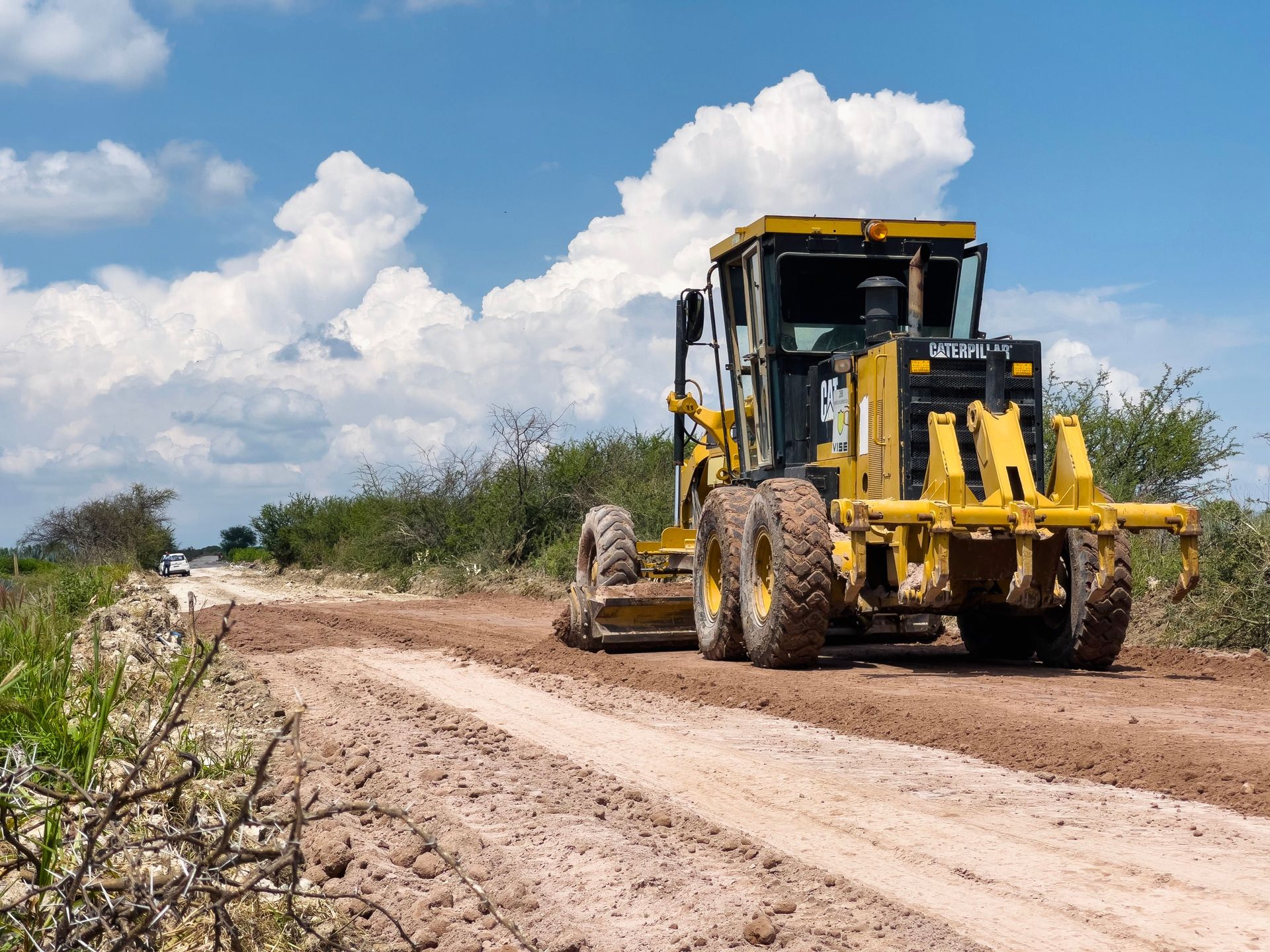
What Proper Land Grading Requires on Rural Property
Effective grading involves more than moving dirt from one place to another. Establishing the correct slope across a surface—enough to direct water away from structures without creating erosion—requires reading how water moves across the existing terrain and designing the finished grade around those patterns. On properties where clearing has already been completed, grading equipment has direct access to the native soil and can establish the needed elevations in one continuous operation. On uncleared sites, grading often follows clearing as the second phase, with any remaining root masses or organic material stripped from the work area before fill is placed or cut material is compacted.
Once grading is complete, you will notice that the surface has consistent slope, stands without visible ruts or depression, and sheds water toward defined edges rather than pooling in low areas. Driveways graded to proper cross-slope stay passable after rain instead of developing mud channels, and building pads graded to specification give construction crews a stable, level starting point. Masengale Land Service works the finished surface until it meets the project requirements rather than leaving rough machine marks that require secondary hand work.
Grading scope can range from a small pad area to several acres of reshaped terrain, and the approach adjusts based on whether the goal is rough shaping for future improvement or finish grading ahead of construction. Properties where soil has been disturbed by previous clearing or old agricultural use may require additional compaction passes to achieve stable subgrade—something that becomes clear during the initial site evaluation.
Answers About How Land Grading Gets Done
These questions address the grading process itself—what drives decisions on site, how terrain and soil conditions affect the work, and what a properly graded surface looks like when the job is finished.
What has to happen before grading can begin?
Vegetation, stumps, and organic surface material need to be removed from any area being graded—leaving root masses or decomposable material in the subgrade creates voids that cause settlement after fill is compacted on top.
How is the correct slope determined for a grading project?
The target slope depends on end use: construction pads are graded level or to a specified tolerance, while driveways and yard areas are graded to a slope that moves surface water away from structures without creating erosion—typically between one and five percent depending on the surface that will be placed on top.
Why does soil type affect how grading is done?
Clay-heavy soils common on rural Enoree-area properties compact well but can become unstable when saturated, which means grading plans for those sites need to account for drainage at the subgrade level, not just at the finished surface.
What is the difference between rough grading and finish grading?
Rough grading establishes the general shape and elevation of a site and is typically done after clearing—finish grading follows to bring the surface to precise elevation tolerances before paving, seeding, or construction begins.
How do you know when a graded surface is ready for the next phase of construction?
A properly compacted and graded subgrade does not deflect visibly under equipment, holds its shape without rutting, and drains consistently across its slope—a surface that still shows soft spots or standing water after grading needs additional compaction or drainage correction before building proceeds.
Masengale Land Service also performs land grading in Woodruff, Whitmire, Clinton, and Laurens. To discuss your property's terrain and what the grading work needs to accomplish, contact Masengale Land Service at (864) 340-3393 and describe the acreage, existing conditions, and your project timeline.