
Wooded Property Prepared for What Comes Next
Residential lot clearing in Enoree for wooded, overgrown, or brush-covered parcels ahead of construction or site development
Masengale Land Service provides residential lot clearing for homeowners and builders working with wooded or overgrown land in Enoree that needs to be prepared before construction, driveway installation, or outdoor improvement can begin. Properties throughout this part of South Carolina tend to be larger rural parcels with established tree canopy, dense understory growth, and mixed brush that accumulates quickly once land has gone unmanaged for a few years. Before any grading, foundation work, or driveway routing can start, that vegetation has to come out in a deliberate sequence that accounts for what gets removed and what stays.
The clearing process begins with identifying the intended building footprint, driveway corridor, or improvement zone and marking what should be preserved—specimen trees, vegetation buffers near property lines, or natural screening the owner wants to keep. Clearing indiscriminately can create boundary issues, disturb drainage patterns at the edges of the lot, and remove vegetation that would have served a structural or privacy purpose. Masengale Land Service works from the site plan or owner-provided layout to define the clearing limits before equipment moves in, so the work removes only what the project actually requires.
To request an estimate for your property, describe your lot size, what you plan to build or install, and which areas need to be cleared.
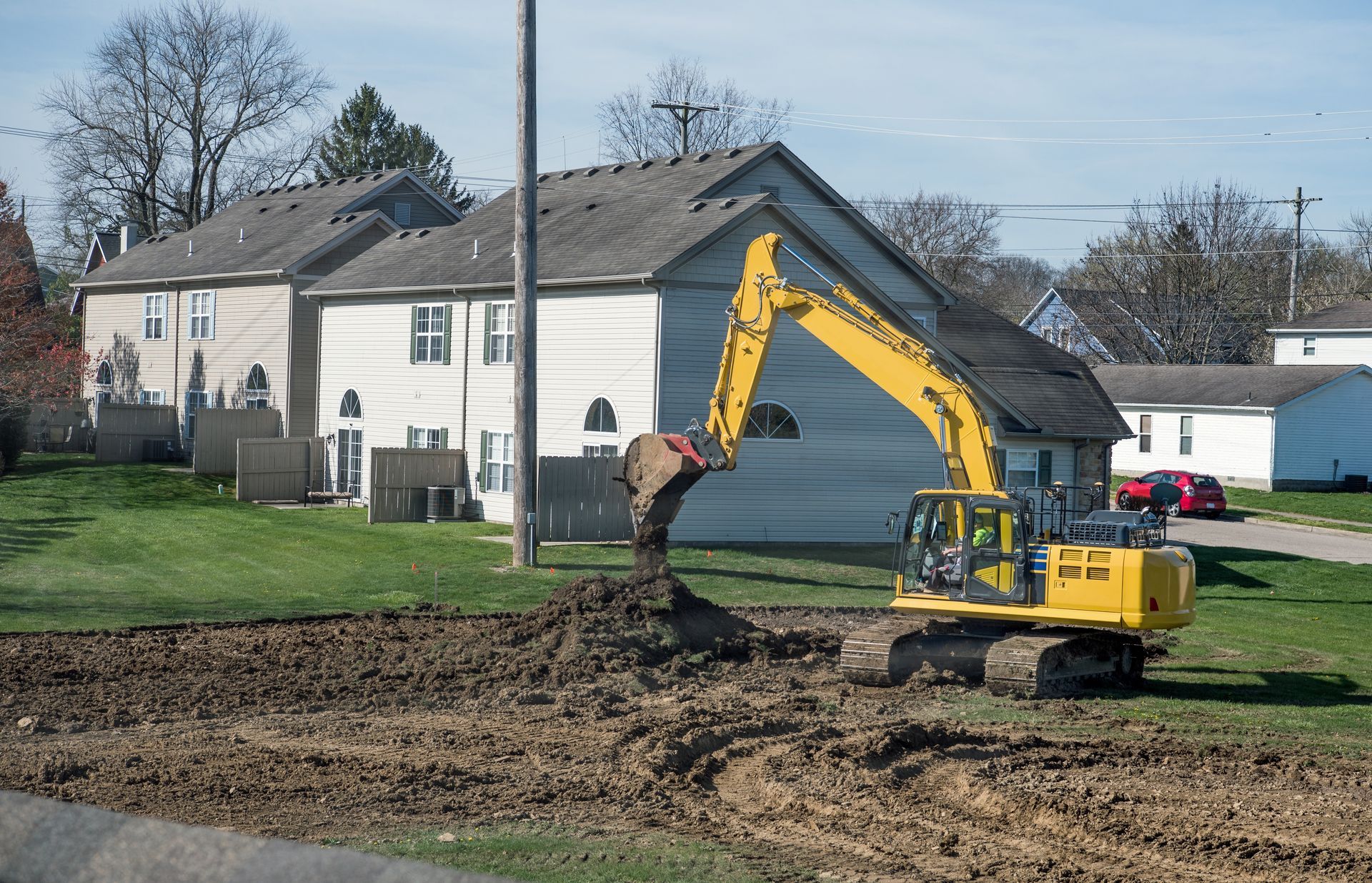
How Lot Clearing Sets Up Every Step That Follows
Residential lot clearing involves more than cutting trees and removing brush—it includes stump removal or grinding where foundations and driveways are planned, debris disposal or on-site mulching where terrain allows, and leaving the cleared zone in a condition that the next contractor can actually work from. Access for the clearing equipment itself is a planning consideration: on tightly wooded parcels, a temporary equipment path may need to be established before the main clearing area can be reached, which affects the sequence of the entire job.
Once clearing is complete, you will have a defined, open footprint where the building area or driveway corridor used to be covered in growth. The boundary between cleared and preserved vegetation should be clean and deliberate, not ragged, so that the preserved trees and brush remain stable at their root zones and don't become a fall risk or erosion source at the edge of the cleared zone. That edge condition matters particularly on sloped parcels where soil exposure after clearing can shift without the root structure that was holding it.
Factors that shape the scope of a lot clearing project include the density and diameter of the tree growth, the presence of large stumps in the building footprint, access constraints at the property entry, and whether debris needs to be hauled off-site or can be chipped and spread on non-building areas of the lot.
Common Questions About Residential Lot Clearing
The questions below address how lot clearing work is planned and carried out, particularly for rural and wooded properties where site conditions vary significantly from one parcel to the next.
What happens to the trees and brush once they are cut?
Depending on the material size and the project plan, cleared vegetation can be chipped into mulch and redistributed on non-building areas of the lot, or loaded and removed from the site entirely. Large-diameter logs may be handled separately based on owner preference and site logistics.
How is the clearing boundary established before work begins?
The clearing limit is defined using the owner's site plan, construction drawings, or a staked boundary walk before equipment is deployed. This step determines what gets removed and what stays standing so that preserved vegetation isn't accidentally damaged during the clearing operation.
Why does stump removal matter for building areas but not for all cleared zones?
Stumps left in a building footprint or driveway corridor will decompose underground and create voids and settlement problems. In areas outside the construction zone, stumps can often be ground flush rather than fully extracted, which is less disruptive to surrounding soil structure.
What should property owners in Enoree consider about equipment access on their lot?
Rural parcels in this area frequently have wet low spots, soft shoulders along the entry point, or narrow access between existing trees. These conditions affect which equipment can be used and in what order, and they are assessed during the initial site evaluation before clearing begins.
How does clearing sequence affect the usability of the lot afterward?
Clearing the building footprint first, then working outward to the driveway corridor and secondary areas, keeps the core construction zone clean and accessible. Working in the wrong order can result in debris accumulating exactly where grading or foundation crews need to operate next.
Masengale Land Service also performs residential lot clearing in Woodruff and the surrounding communities. When you contact Masengale Land Service, sharing your property dimensions, intended construction plans, and any boundary or access constraints will allow for an accurate clearing estimate and site assessment.